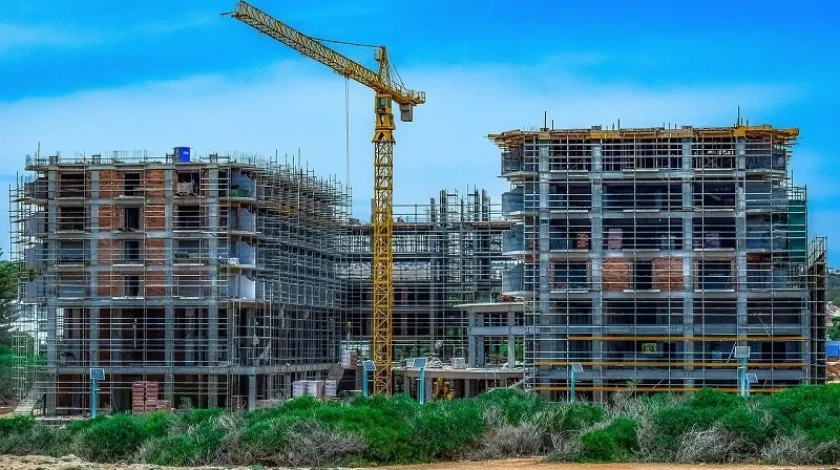
The Residential Apartment Buildings (Compliance and Enforcement Powers) Act 2020 (NSW) (the Act) is the NSW Government’s latest tool in its arsenal to deal with the continued and growing concerns regarding the quality of residential apartment construction within NSW. The Act provides substantial powers to the Secretary of the Department of Customer Service (Secretary) to proactively investigate and rectify defects in residential apartment buildings that are either being constructed or have been constructed within the preceding 10 years.
The Act commenced on 1 September 2020 and has caused a significant widening of the definition of a developer (although at this stage it is only for the purposes of this Act). The Act has had a significant implication for developers and other associated parties within the construction industry insofar as they fall within the definition of a developer.
Key Points to be aware of:
- The Act only applies to buildings that include residential apartment work, which can also mean that mixed use development is captured by the Act.
- The Act provides powers to the Secretary and any authorised officer of the Secretary to conduct inspections and investigations into building work and provides a framework for the completion of residential apartment building work, as well as both remedial works and the rectification of serious defects.
- Amendments to the definition of a Developer – The Act has amended the definition of a developer to be a very broad, substantial definition. Rather than considering a developer as any entity that either (directly) contracts or arranges for the building work to be completed, the Act also considers a developer to be a person who facilitates or causes (whether directly or indirectly) the building work to be carried out. This is a very broad definition that any party involved in the construction of residential apartment buildings should keep in mind.
- Sets out a Notification Scheme so that any Developer under the Act must provide a Notification of Expected Completion (NEC), by notifying the Secretary at least 6-12 months prior to applying for an occupation certificate; and where there is a change to the expected date of completion by more than 60 days notify the Secretary within 7 days of becoming aware of that change. There are penalties for both corporations and individuals for failing to comply with the notification scheme.
- Sets out the orders that the Secretary may issue, including:
a. Prohibition Order, which can prohibit the issue of an occupational certificate, and, if relevant, the registration of the strata plan;
b. Stop Work Order, which is issued when the Secretary has formed the view that the continuation of the building work is, or is likely to be, carried out in a manner that could result in significant harm or loss to the public, the occupiers or potential occupiers; and,
c. Building Work Rectification Orders; where the Secretary has a reasonable belief that building work was or is being carried out in a manner that could result in in a serious defect. A BWRO is issued in order to eliminate, minimise or remediate the serious defect or potential serious defect.
Transitional Period
The initial 6-month period following the commencement of the Act on 1 September 2020 is a transitional period. During the transitional period, a building element is defined within the Act. Once the Transitional Period is completed, a building element will be defined in accordance with the Design and Building Practitioners Act 2020 (NSW).
In the event that a developer wishes to apply for an occupational certificate during the transitional period, the expected completion notice needed to have been provided to the Secretary within 14 days of the commencement of the Act.
If you would like more information in relation to the statutory reform or any general enquiries in relation to how the Act will impact you, please don’t hesitate to reach out to Coleman Greig’s Building and Construction lawyers, who are highly experienced and are able to provide expert, tailored advice – no matter the complexity of the matter at hand.