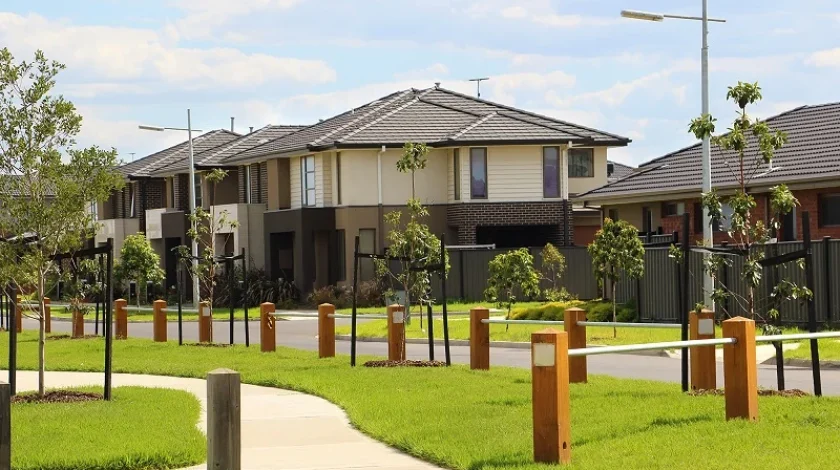
Modern houses in a suburban neighborhood

“Abolishing Stamp Duty – the key in supporting Australia’s economy post COVID-19”

Chris Tohme ||

Although first home buyers get the benefit of being exempt or having reduced stamp duty, many other Australians wishing to invest in the property market or simply retirees wanting to downsize their home get stung with stamp duty tax. This tax often deters people from purchasing property.

Stamp duty is often described as the “unpopular” and “inefficient” tax, and abolishing stamp duty could be the key in propping up Australia’s economy following COVID-19.

The Australian Bureau of Statistics’ latest data has revealed that stamp duty revenue has slumped to a four-year low in the 2018/19 financial year. As stamp duty is levied on the purchase price of a property and as such higher priced properties ultimately pay more stamp duty, you can see that stamp duty is greatly reliant on the high turnover of property and/or increases of property prices.

The Australian property market will likely fall due to COVID-19 and because of this stamp duty revenue will decline further in the next 2019/20 and 2020/21 financial years.

What will replace stamp duty?

It is said that a form of annual land tax would be the most likely alternative to stamp duty, however the costs, operation and change over process from stamp duty to land tax is unclear.

The ACT government is leading the way on a stamp duty reform where in 2012, the government began a 20-year process of breaking away from stamp duty to a broad based land tax.

Although replacing stamp duty with land tax is sometimes put in the ‘too hard basket’, it can be done. And when the government does, buyers would soon find their next purchase to be more affordable and in turn prop up the Australian economy.

If you have any questions in relation to stamp duty or the purchase of property, please do not hesitate to get in touch with a member of Coleman Grieg’s Commercial Property team, who would be more than happy to assist you today.

Disclaimer: This article is for general information purposes only and is not a substitute for legal advice. For more details, please read our full disclaimer.

Share:

Send an enquiry

Any personal information you provide is collected pursuant to our Privacy Policy.

Categories
Archives
Author

More posts

NSW Building Commission
The NSW Building Commission’s extraordinary powers

In late 2023, the NSW Government passed the Building Legislation Amendment Bill 2023 (Amendment Bill). The Amendment Bill established the NSW Building Commission and granted it extraordinary powers to enter construction sites, inspect work and take away information and materials.

Year-end land tax and foreign surcharge – What you need to know

With 31 December 2025 fast approaching, if you have not done so already, we encourage you to review/double check your property arrangements and documentation. Assessments for land tax and foreign surcharge are issued around this time, and understanding your obligations now can help you avoid unexpected liabilities.

Key changes to Paid Parental Leave under Baby Priya’s Law

Last month, the Australian Government passed landmark legislation called the Fair Work Amendment (Baby Priya’s) Act 2025, providing additional protections for employees who receive employer-funded paid parental leave.

A father and daughter look at a tablet together
Changing a child’s name after separation

Separation can bring with it a range of emotions and the dispute between separating parents can be far and wide, including whether the surname of a child should be retained or changed.

Photo of a woman handing a child a bag
When child support doesn’t cover the costs – What you can do

In Australia, child support is governed by the Child Support (Assessment) Act 1989 (Cth). It is processed through Services Australia (Child Support) where a formulaic approach is taken to determine the amount of child support payable by one parent to the other.

© 2026 Coleman Greig Lawyers  |  Sitemap  |  Liability limited by a scheme approved under Professional Standards Legislation. ABN 73 125 176 230