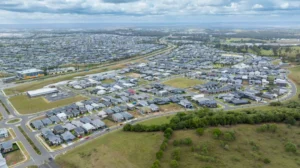
There are 2 main visa options available for employers in regional Australia – the Skilled Employer Sponsored Regional (Provisional) visa (subclass 494), which is a temporary 5 year visa, with the potential to apply for permanent residency after 3 years, and the Regional Sponsored Migration Scheme visa (subclass 187), which is a permanent resident visa.
Skilled Employer Sponsored Regional (Provisional) visa (subclass 494)
This visa enables regional employers to address identified labour shortages within their region by sponsoring skilled workers where employers can’t source an appropriately skilled Australian worker.
Skilled Regional (Provisional) visa holders will have their visa extended by 3 years on 18 February 2022 if the primary visa holder was outside Australia at any time between 1 February 2020 and 14 December 2021 (inclusive).
Employee sponsored stream
With this visa, you can live, work and study only in designated regional areas of Australia for 5 years, travel to and from Australia and, if eligible, apply for permanent residence after 3 years from the time your visa is granted.
Eligibility Criteria
- You must be nominated to work in an occupation on the relevant skilled occupation list
- Have at least 3 years relevant work experience in your nominated occupation
- Have a relevant skills assessment
- Work only for your sponsor or associated entity
- Usually be under 45 years of age
- Meet minimum standards of English language proficiency
Regional Sponsored Migration Scheme visa – Temporary Residence Transition stream (subclass 187)
This visa allows skilled workers, who are nominated by their employer in regional Australia, to live and work in Australia. If you are granted this visa, you can stay in Australia permanently, sponsor eligible family members to come to Australia and apply for Australian citizenship, if eligible.
Eligibility Criteria
- You must hold a substantive visa or a Bridging visa A, B or C
- Have worked for your employer in regional Australia for at least 3 years holding a subclass 457 or 482 visa
- Be nominated by an Australian employer whose nomination was approved in the 6 months prior to you applying
- Be under 45 years of age, although exemptions apply
This information has been extracted from the Department of Home Affair’s website and is current as at the time of publication. If you would like assistance with regional employer sponsored visa options, please contact our Employment and Migration Team.